


Call us today
+91 7666623459
AI-Enhanced Social Engineering Threats 2025
- SVTECHSHANT DEVELOPER
- September 9, 2025
-
- 0
Cybersecurity has always been a game of cat and mouse — but with Artificial Intelligence (AI) entering the battlefield, the rules are changing. Traditional social engineering scams, such as phishing emails and fake calls, are now supercharged by AI, making them harder to detect
and more dangerous than ever.
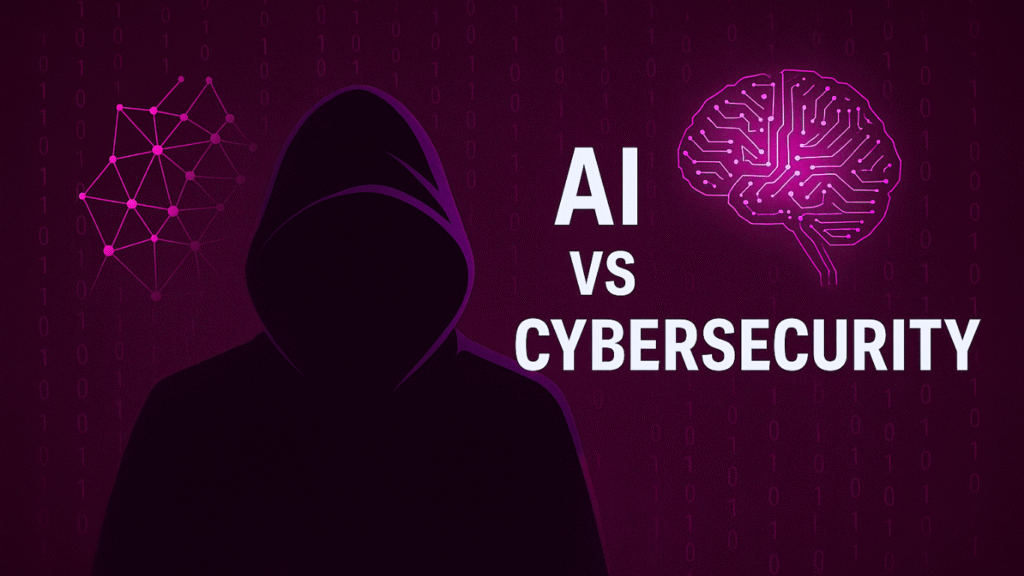
In 2025, AI-enhanced social engineering threats are emerging as one of the biggest challenges for businesses, governments, and individuals. Let’s explore how this new wave of cybercrime works, real-world examples, and strategies to protect yourself.
What Are AI-Enhanced Social Engineering Threats?
Social engineering relies on manipulating human psychology — tricking people into revealing passwords, clicking malicious links, or transferring money. With AI, attackers can now:
- Generate hyper-realistic phishing emails using natural language processing (NLP).
- Create deepfake videos and voices that perfectly mimic real people.
- Automate large-scale attacks with adaptive machine learning algorithms.
- Analyze personal data from social media to craft personalized scams.
The result? Scams that are more believable, scalable, and dangerous than ever before.
Real-World Examples of AI-Powered Attacks
1.Deepfake CEO Fraud – Cybercriminals used AI-generated voices to impersonate company executives and trick employees
into transferring millions of dollars.
2.AI Phishing Bots – Advanced bots now generate emails that adapt in real-time, making them almost indistinguishable from
legitimate corporate communication.
3.Fake Recruitment Scams – AI-generated LinkedIn profiles and fake job offers have been used to steal personal and financial data.


Why Are These Threats So Dangerous?
- Scalability: AI allows hackers to target thousands of victims simultaneously.
- Believability: Deepfakes and AI-written messages are nearly impossible to detect.
- Speed: Automated systems can launch attacks much faster than humans.
- Data-Driven Precision: AI can analyze public data to personalize scams for each victim.
Protecting Against AI Social Engineering Threats
Here’s how businesses and individuals can stay safe:
- Awareness Training – Employees must learn how to detect phishing, deepfakes, and suspicious requests.
- Multi-Factor Authentication (MFA) – Even if credentials are stolen, MFA adds another layer of protection.
- AI-Powered Cybersecurity – Fight fire with fire: Use AI-based tools to detect unusual behavior and fake content.
- Strict Verification Protocols – Always verify sensitive requests through multiple channels.
- Continuous Monitoring – Businesses should monitor network activity for early signs of compromise.
The Future of Cybersecurity in 2025 and Beyond
As AI technology evolves, so will cyberattacks. The good news is — cybersecurity experts are also leveraging AI to build smarter defenses.
The key is staying ahead of attackers through awareness, technology, and proactive security measures.
Conclusion
AI-enhanced social engineering threats are not just a trend — they are the future of cybercrime. From deepfake scams to AI-powered phishing, the risks are real and growing. But with the right combination of education, technology, and vigilance, individuals and organizations can safeguard themselves against these next-generation threats.
At SVTechShant Pvt. Ltd., we help businesses adopt AI securely while protecting their digital assets from evolving cyber risks.
FAQ
What are AI-enhanced social engineering threats?
They’re cyberattacks where criminals use Artificial Intelligence to supercharge traditional scams like phishing, vishing, and impersonation. AI creates more realistic emails, voices, and deepfakes, making these attacks harder to detect and easier to scale.
How does AI make social engineering scams more dangerous in 2025?
AI enables hackers to generate hyper-realistic content, automate attacks at massive scale, personalize messages using public data, and respond in
real time. This combination increases believability, speed, and precision compared to old-style scams.
What are some real-world examples of AI-powered attacks?
Examples include deepfake CEO fraud (AI-generated voices tricking staff into transferring funds), adaptive AI phishing bots that mimic corporate
emails, and fake recruitment scams using AI-created LinkedIn profiles to steal personal or financial data.
Why should businesses and individuals worry about these threats?
Because AI gives attackers unprecedented scalability, speed, and credibility. Even trained employees can be fooled by AI-generated content,
increasing the risk of data breaches, financial loss, and reputational damage.
How can organizations protect themselves from AI-enhanced social engineering?
Use layered defenses:
Conduct regular awareness training on phishing and deepfakes.
Enforce multi-factor authentication (MFA).
Deploy AI-powered cybersecurity tools to spot anomalies.
Verify sensitive requests via multiple channels.
Continuously monitor networks for suspicious activity.
Populer Categories
Populer Posts

AI-Enhanced Social Engineering Threats 2025
By SVTECHSHANT DEVELOPER September 9, 2025
The Role of IT in Supporting Remote Technologies
By chalaksushant January 29, 2025

DevOps vs. Traditional IT Infrastructure Taking Over
By chalaksushant January 29, 2025
Populer Tags
AI-enhanced social engineering threats
AI-powered cyberattacks 2025
AI cybersecurity solutions
AI in social engineering
Artificial Intelligence in cybersecurity
Banking
Business
Consulting
Credit
Cybersecurity awareness training
Deepfake scams and frauds
Finance
Future of cybersecurity 2025
Protect against AI threats
Repair